If you just got a QuickBooks Payments chargeback notice, you are on the clock. This page walks you through what is actually happening, how to respond, and what it realistically takes to win your challenge, based on real client cases we have helped resolve, not theory.
This page will cover:
- What the situation looks like
- How to respond
- What you can do to increase your odds of winning your money back
- Realistic expectations on time you will wait to get your money returned to you.
- Things you can and should do to be prepared for when this happens
So, one of your customers received your items or services and then, maybe a month or more later, disputed a charge through their bank. You find this out when the funds are suddenly just removed from your own bank and this hits your business's cashflow hard when you least expect it, possibly crippling your ability to operate.
Your own vendors may alert you first that your payments to them bounced and you, dazed and confused as to how that could be since you manage your business cashflow tightly, immediately go to your bank's website to find out what is going on. There it is. A large withdrawal you did not anticipate or approve staring at you from your bank's online portal has drained your operating funds.
And then you see that QuickBooks Payments actually sent you an email with a case number and a deadline to respond. You were too busy running your business and serving your customers with top-notch service to read what you assumed was a marketing email of some sort. But that deadline in that email, usually about a week but always specific to your case, is real no matter when you got around to reading it.
When your emotional jolt, panic, and righteous indignation dies down, you realize you need to do something to get that money back. Set aside your thoughts of the injustice and what great service you gave this customer and the feeling of betrayal that they kneecapped your business without a care for your own family's wellbeing. You are mad at the system that permits this and mad at your own customer. Those are all real and understandable feelings, but they won't get your money back.
Many people assume they have time to breathe and that they can just deal with this later. But the time needed to reach your customer, pull together documentation, and get it submitted the right way to win the "challenge" to the dispute is non-negotiable. This task will be pulling you away from your other work or home life THIS WEEK for at minimum 2-3 hours (if you know what you are doing and your documentation is accessible to you) and there is no way around it.
Don't wait until the last day, either, to respond on the QuickBooks' website. If an upload fails, if a page glitches, if something in the Resolution Center doesn't cooperate, that's still your problem to solve before the clock runs out. Nobody accepts "the software didn't work" as a reason for a missed deadline. Start pulling your documentation together today, not later this week.
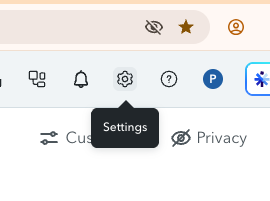
Submit it early and stay on top of the Resolution Center status (you will find the Resolution Center by clicking the little gear in the upper right corner of your QuickBooks Online dashboard or by the link in the original email they send you to tell you your money was taken due to this disputed payment).
And be honest with yourself about the odds. Even a complete, well-organized case can still lose. The bank makes the final decision, and they can look at strong evidence and rule against you anyway. That's part of what it means to accept credit cards. Good documentation doesn't guarantee a win. It's what gives you a real shot instead of no shot. And, yes, it is completely unfair (talk to your politicians to fix this later but get your documentation in today).
How the process actually works
IMPORTANT: You will need to do this process no matter what your customer promises you when/if you reach them about their dispute.
You gather your documentation and submit it all through the QuickBooks Payments Resolution Center portal for your case number they issued you. (Link is in the first email they send on this). You should see a confirmation of your submission there in the Resolution Center. Take a screenshot of this before it disappears. You may need to prove the date you submitted everything because technology fails while deadlines live on.
Once you submit successfully, QuickBooks checks your packet for completeness before it's even forwarded to the bank, and that check alone can take up to five business days. They refer to this as the "under review" phase. You will see this on your timeline on your case at the top. Refresh your web browser after a couple minutes and it should go from "Evidence Requested" to "Intuit Review" if your document upload worked.
You will see on your Resolution Center case page that QuickBooks discloses the bank can take up to 50 days to reach a final decision. That number is not your deadline, it's the bank's own internal window. And that 50 days does not even start until QuickBooks actually finishes their review and pushes the challenged case to your customer's bank for a decision. This 50 days is less of a "could take" and more of a "you can count on it" clock. The bank has your money and is earning interest on it and has zero motivation to give your money back before the law requires it.

Here is why the real number tends to run closer to 70 days than 50: add in the time it takes you to file your challenge, the extra days QuickBooks often uses for their own internal review beyond the stated timeframe, the full 50-day bank window once your case actually reaches the bank, and the few more days it takes the funds to post back to your account, and 70 days is a realistic total. Hear me when I say this. Even if your customer is very sorry and immediately contacts their own bank to confess they made a mistake and assures them this is a valid charge, you will still be waiting for around 70 days in total to get these funds back into your bank account.
How to challenge a dispute (or "chargeback" as they are sometimes called), step by step
- Contact the customer first. A lot of chargebacks aren't fraud, they're confusion. Your business name might show up differently on their card statement than they expect. Someone else with access to the same card statement might not have recognized the charge. Or the customer just forgot the great service or beautiful bauble you sold them. If it was a genuine mix-up, ask the customer to contact their own bank directly and say so. That doesn't get your money back right away, the bank holds the funds for the full review period regardless of what the customer says, but it meaningfully improves your odds once the bank sees the customer's own correction sitting alongside your evidence.
- Find your actual deadline. Not the 50-day figure QuickBooks quotes you, that's the bank's own decision window, not yours. Your real deadline is the specific date shown in your Resolution Center for this case and that was listed on the initial email QuickBooks sent you from Intuit Payments.
- Gather your documentation. What you need depends on what the customer is claiming, but the strongest packets consistently include:
- The signed or accepted estimate, showing exactly what was agreed to and for how much
- The invoice, or invoices, and any credit memo if a deposit applied to the second invoice.
- Photos from the job site, with location, date, and time turned on in your phone's settings to "prove" you were on site on that date and time.
- Written confirmation the customer approved the estimate, not a phone call. Screenshots of texts or printed emails work well.
- A signature or written confirmation at completion, if you have one
- Your communication log with the customer, in order, especially anything showing they were satisfied or never complained before filing the dispute
- Screenshot of the glowing review this same customer left after your service to them (yes, 5-star reviewers will also dispute charges)
- Submit as early as you can, not on the last day. We have found that pdf files are your best bet with the Resolution Center's system. Ignore their suggestion that Word documents are fine. In our experience, they are not fine. Plus, a pdf is a safer bet for the document you created being in the exact format you meant for it to be read. Submitting close to your deadline risks it not being reviewed in time no matter how strong it is if there is a glitch in the Intuit software. Give yourself the buffer by submitting early, is our best advice.
- Monitor your case. You can contact Intuit through the QuickBooks customer service number on your case screen in the Resolution Center. Give them the case number and ask them for the date the bank received your case and challenge documents AFTER the case shows it has moved out of the QuickBooks staff review and into the bank review stage. Then, count out 51 days and mark this on your calendar to check on your case again. If you don't see the resolution and the money isn't back in your bank, you are going to call QuickBooks/Intuit again. Remember, no one on the planet is as motivated to stay on top of this better than you since it is your money being held out of your bank account. Be your own best advocate.
What actually wins these
Every chargeback comes with a "reason" attached with a code number. This is the card-issuing bank's shorthand for what the customer is claiming about the disputed charge. Maybe they say the work was never done. Maybe they say it wasn't what they agreed to. Maybe they say they never authorized the charge at all, or that they were billed twice, or that a refund they were owed never came through. Whatever it is, the evidence that actually moves a case is the evidence that answers that specific claim. Generic paperwork that doesn't speak to what the customer is actually saying doesn't help you, no matter how much of it you send. Make sure your argument in your challenge directly addresses what the customer claimed to be the reason for the disputed charge.
Protect yourself before it ever happens
They say the best defense is a good offense (Or is it the other way around?). But, in protecting yourself from chargebacks/disputes, this is totally true.
If your business is flying by the seat of its pants, vague line items on invoices, no real description of what was actually sold, no terms written down anywhere, it doesn't matter how much documentation you scramble to find later. A customer can't be held to something they were never told in writing. Whatever you explained to them out loud is not proof of anything. The only thing that counts is what you actually put in writing and sent them.
That means specific, descriptive line items on every estimate and invoice, not vague ones. It means writing your terms, your cancellation policy, whatever the customer needs to know, directly into the memo or notes section of the estimate and the invoice, not just saying it on the phone. It means having the customer approve their estimate in writing, not verbally. It means a signature when you can get one. It means photos from the job site with location, date, and time turned on in your phone settings, so there's no question of where and when the work happened. It means being able to show exactly who you were dealing with and exactly what they agreed to pay for.
And, this is VERY important. Never ever key a customer's card number in yourself into your QuickBooks payment screen. Have them pay their own invoice, from their own device, or by swiping their own card. If you type a customer's number in for them, especially over the phone, you have almost no way to prove you were actually talking to the person who owns that card, and that's exactly the kind of claim that's hardest to fight. Email or text the invoice and let them pay it themselves instead.
Remember, it is easy to steal a card number or even a credit card and then call around charging things to that card over the phone. This is actually a point where I agree with the banks on refusing to cover these situations. You may be a trustworthy person and would never steal someone else's credit card. My advice is that you do NOT project that same level of trustworthiness onto an unknown person over the phone.
Con artists and thieves have well-rehearsed stories and they will always try to rush you on the phone in their "crisis" situation. Your business can have heart, but you are not a charity and you should never just trust a stranger's voice on the other end of the line because they happened to find your phone number. "Let me just give you my card number" is a common ploy with these bad actors. Don't do it. Offer to send them a payment link to their email address or phone number at very least and make them enter in their own card number. This takes you out of the mix in terms of who entered what and creates at least a bit of a paper trail on who used the card number.
None of this is QuickBooks-specific. It applies whether you use QuickBooks or something else entirely. It's just what it takes to have something real to stand on if a dispute ever shows up.
Common questions
How long do I actually have to respond?
At time of writing this, Intuit Payments was allowing about a week to file your challenge. But check your email and the Resolution Center portal for your case. Your real deadline is whatever date is shown in your Resolution Center.
If I have great documentation, am I guaranteed to win?
No. The bank makes the final call and can rule against you even with strong evidence. Documentation improves your odds. It doesn't guarantee the outcome.
Does the disputed money actually leave my account right away?
Yes. The funds are typically pulled from you when the dispute opens, not only if you lose. If you win, or the customer doesn't respond by their own deadline, you get the disputed amount back afterward if their bank deems it so and decides in your favor.
Should I contact the customer directly?
Yes, before anything else. Many chargebacks are honest confusion rather than fraud, a statement descriptor they didn't recognize, someone else on the account who didn't know about the charge. If the customer acknowledges their mistake and agrees to contact their bank right away, that is awesome. Ask them if they can get an email or something from their bank confirming they did that and share it with you for your own challenge submission. It doesn't guarantee anything, but it definitely should help the bank to decide in your favor.
Some good and honest customers will even "own" their mistake and offer to make you whole immediately while this is sorted out with their bank. You can take their apology and their funding. Just make sure you handle it correctly in your books so it doesn't look like more taxable income at tax time. If their bank later decides to give your original payment back to you, just forward that (less any fees you were charged) to your good customer.
We recommend letting them pay you with Zelle so there are no more transaction fees involved for you and you get your bank account back in ship shape almost immediately. They may also offer to meet you with cash. We strongly recommend NOT running their card again as this only muddies the waters on your challenge. Make sure all of this goes down in writing, or with a follow up note they respond to in writing if they are apologizing and offering to get you your money on the phone.
What's the single most important thing I can do before a chargeback ever happens?
Put everything in writing. Descriptive invoices, clear terms in the memo section, signatures and dated photos where you can get them, and customers paying their own invoices themselves rather than you keying in their card. If it isn't written down, it isn't evidence. Do we sound like a broken record on this yet? Good. We want you to beat these cases and this is the only way.
A tool that helps you pull it together
If you're a current 21Five Consulting client, our Chargeback Dispute Tool walks you through your specific case and helps you organize the documentation your response needs. It helps you put together a clean packet ready to upload into the Resolution Center. It doesn't fight your case for you, and it doesn't guarantee an outcome. It's a tool for pulling your own evidence together quickly and correctly, so you're not starting from a blank page under deadline pressure with your brain swimming with panic.
Not a current client yet and want support like this in place before your next chargeback? Book a free 30-minute call to talk through how we can help.